

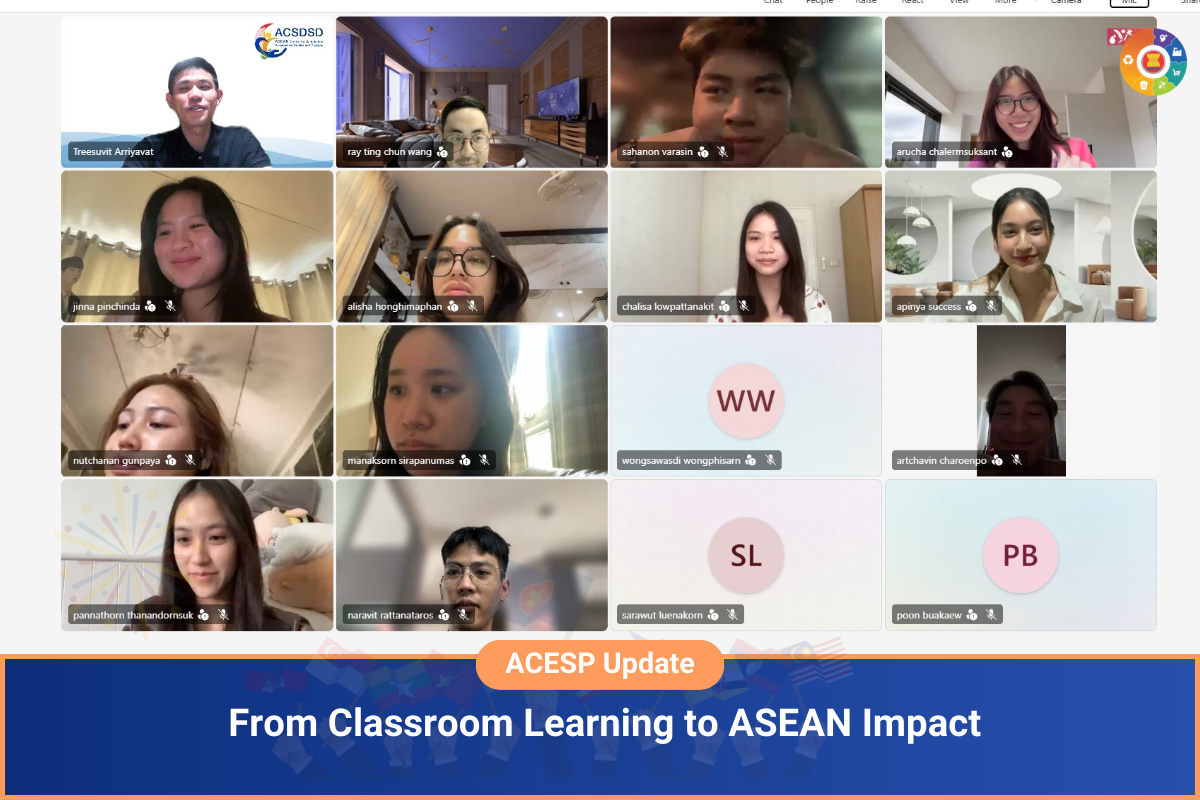
The ASEAN Circular Economy Stakeholder Platform (ACESP), hosted by the ASEAN Centre for Sustainable Development Studies and Dialogue (ACSDSD), is pleased to collaborate with the Faculty of Journalism and Mass Communication, Thammasat University through the course Communication for Sustainability, led by Assist. Prof. Ray Ting-Chun Wang, Ph.D.
This collaboration brings real-world circular economy communication challenges into the classroom, connecting ASEAN regional sustainability discussions with the perspectives of emerging communication professionals. Students were introduced to the complexities of promoting reuse, redesign, and circular economy practices in ASEAN, with a strong emphasis on understanding behavioural, cultural, and market-related barriers—beyond technical or policy considerations.
Designed as a client–agency simulation, ACESP and ACSDSD acted as a real client, providing students with a professional briefing and inviting them to develop campaign concepts aligned with ASEAN realities. The learning process encouraged systems thinking, critical reflection, and the translation of complex sustainability concepts into relatable narratives suitable for diverse ASEAN audiences.
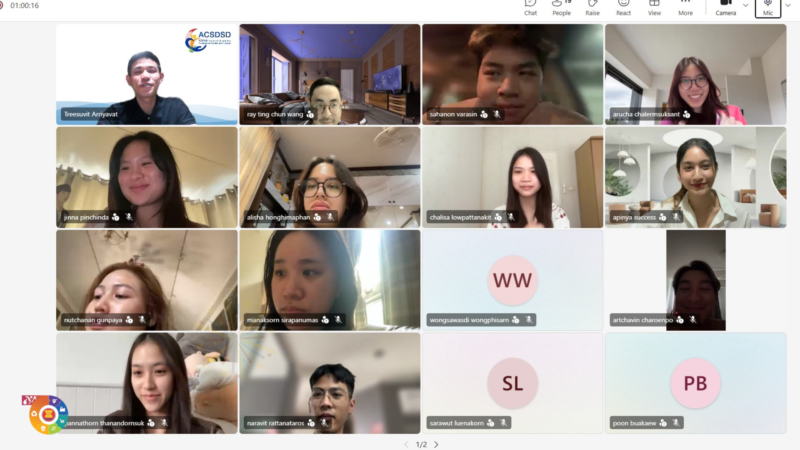
As part of the introductory session, Dr. Treesuvit Arriyavat, Senior Project Manager of ACESP, delivered a guest lecture introducing students to the ASEAN Circular Economy Stakeholder Platform (ACESP)—its mission, objectives, and the different ways the platform works to advance circular economy practices across ASEAN. The lecture also covered core circular economy concepts, with particular emphasis on reuse and redesign, supported by practical examples from different ASEAN and regional contexts.
Beyond concepts and case examples, the session highlighted a critical insight: while technical solutions and policies exist, communicating circular economy ideas effectively remains a major challenge. Discussions explored why reuse can be perceived as inconvenient, why redesign often remains invisible to consumers, and how sustainability messages can be disconnected from everyday life if not carefully framed.
The lecture also outlined the project requirements, where students were invited to work as communication teams responding to a real client brief from ACESP and ACSDSD. Students were tasked with developing campaign concepts that translate complex circular economy practices into clear, credible, and ASEAN-relevant narratives.
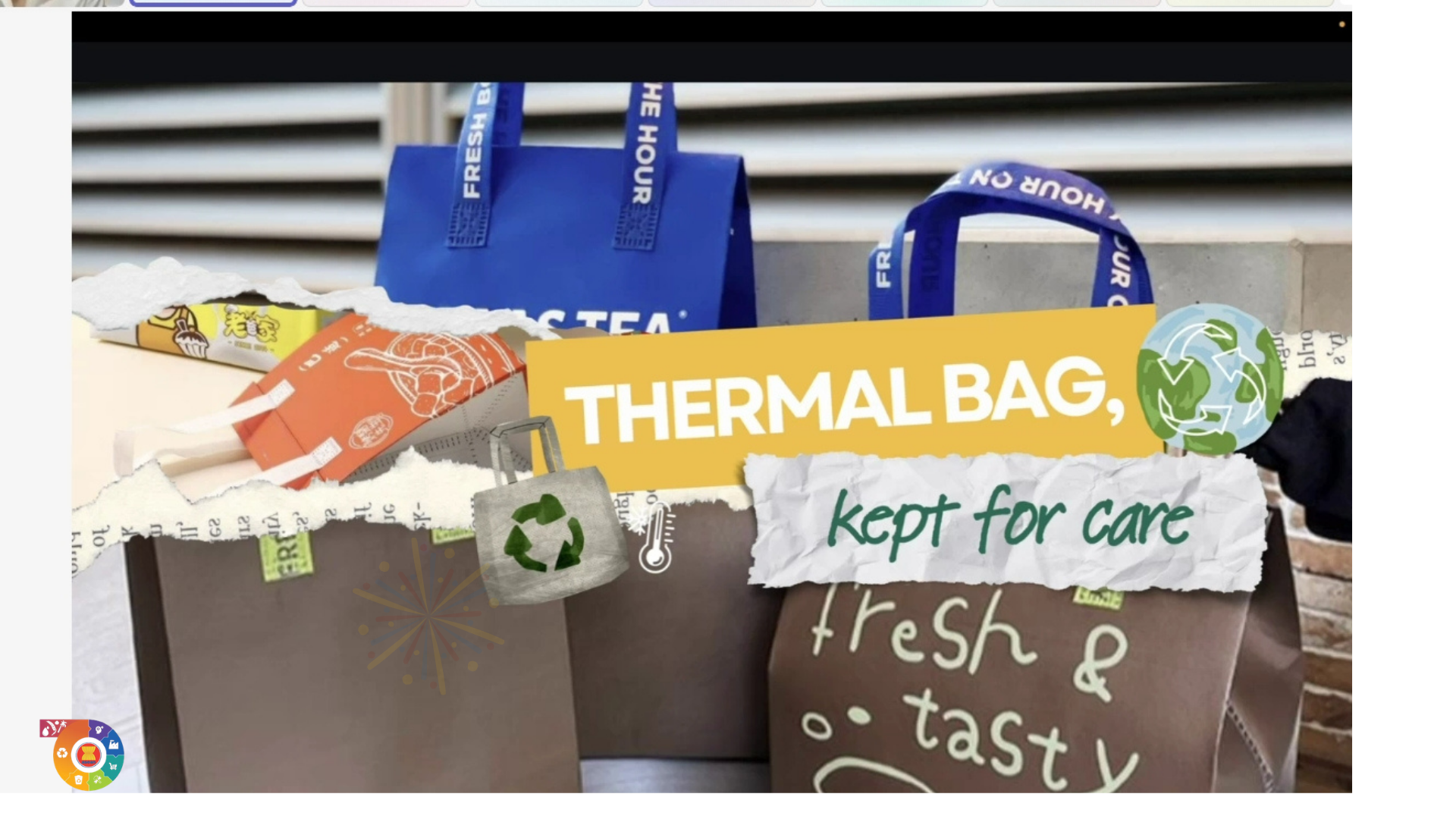
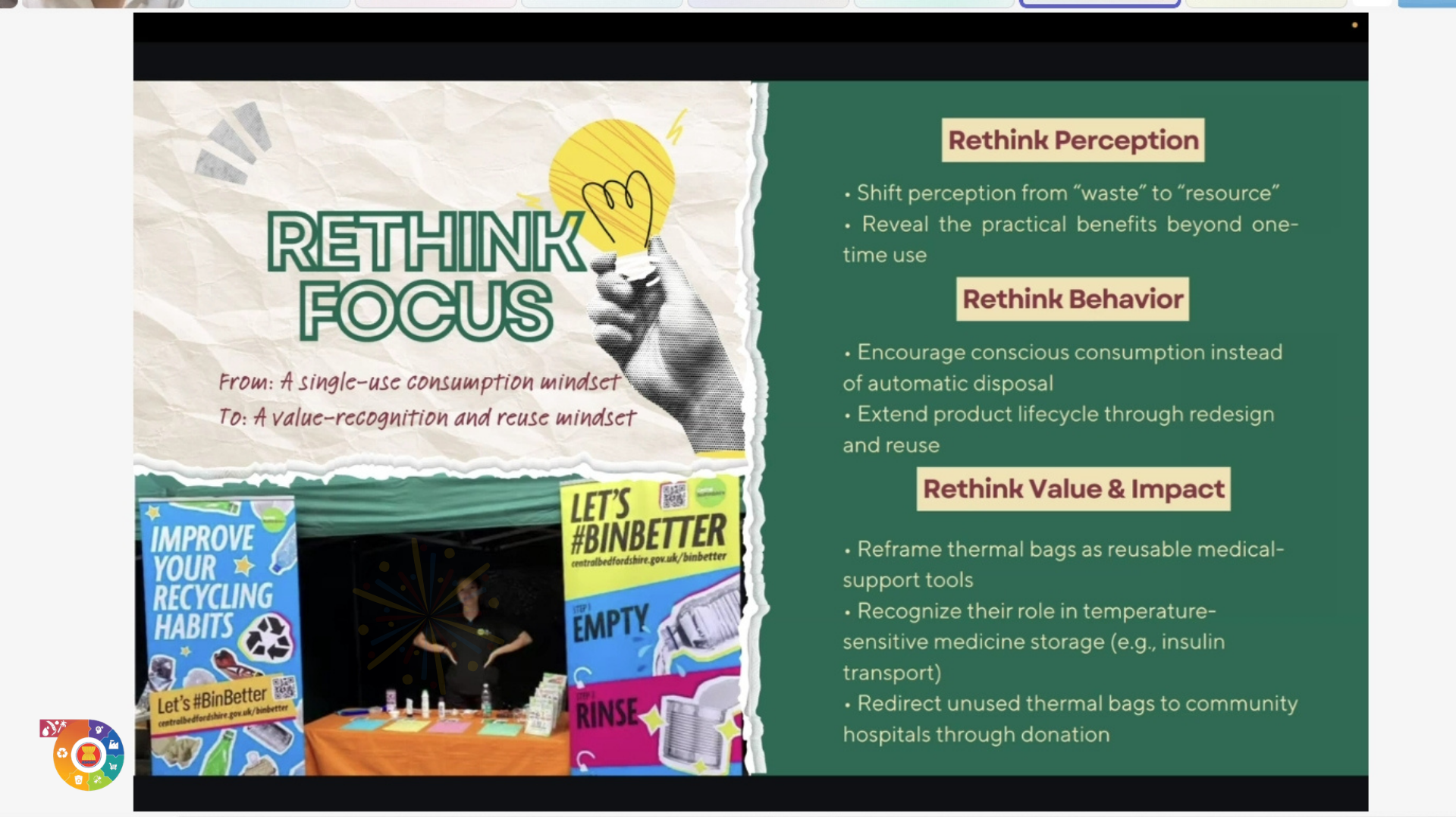
Following an introductory session, the second online session focused on student campaign pitches, where participants presented their ideas and received professional feedback. The images featured in this post are from this second session, capturing active engagement, thoughtful discussion, and creative exploration of how circular economy messages can become socially desirable and actionable.
ACESP and ACSDSD would like to express sincere appreciation to the Communication for Sustainability course and Assist. Prof. Ray Ting-Chun Wang, Ph.D., for their openness to collaboration and commitment to nurturing future communicators. This partnership reflects a shared belief that strengthening human capital and communication capacity is essential to advancing ASEAN’s transition toward a more inclusive and resilient circular economy.