
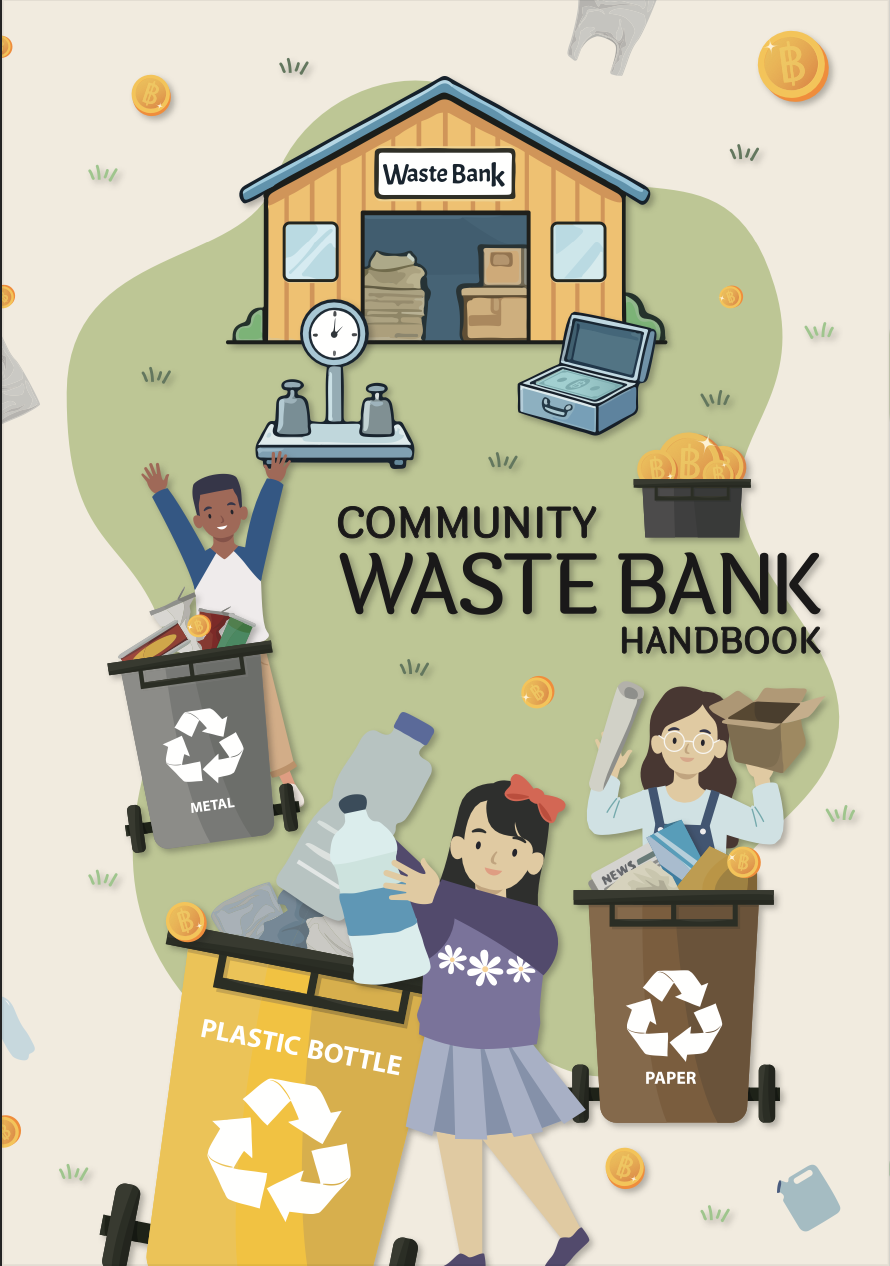
This Community Waste Bank Handbook is a collaborative publication between Thailand and Denmark designed to promote circular economy principles through local action. It outlines a strategic framework for transforming recyclable materials into financial assets by using a banking model where citizens deposit waste instead of cash. By fostering public participation and systematic waste segregation, the initiative aims to reduce landfill reliance while generating supplementary income for households. The guide serves as a practical manual for community leaders and local authorities to establish sustainable systems that align with Global Sustainable Development Goals.
Key Takeaway
A key takeaway from the sources is that a community waste bank acts as a transformative social innovation that applies financial principles to waste management, enabling communities to treat “waste” as a valuable resource rather than a burden.
This mechanism provides value across three critical dimensions:
- Economic Value: By treating sorted recyclables like bank deposits, the system creates supplementary income for households and establishes a community-based revolving fund.
- Environmental Impact: Waste banks are a practical tool for implementing a circular economy, as they reduce the volume of waste sent to landfills and decrease the demand for new natural resources by returning materials to the production cycle.
- Social Development: These banks foster community unity and resilience by creating welfare systems, such as funeral aid, health funds, and scholarships, which are funded by the margin generated from collective waste sales.
Ultimately, the handbook underscores that the sustainability of a waste bank depends on transparent management and active public participation, ensuring that waste management becomes a shared community culture rather than just a government-led project